Miami's Art Deco Historic District: A First-Timer's Complete Guide
 Nextbreakout team with Google AI Studio
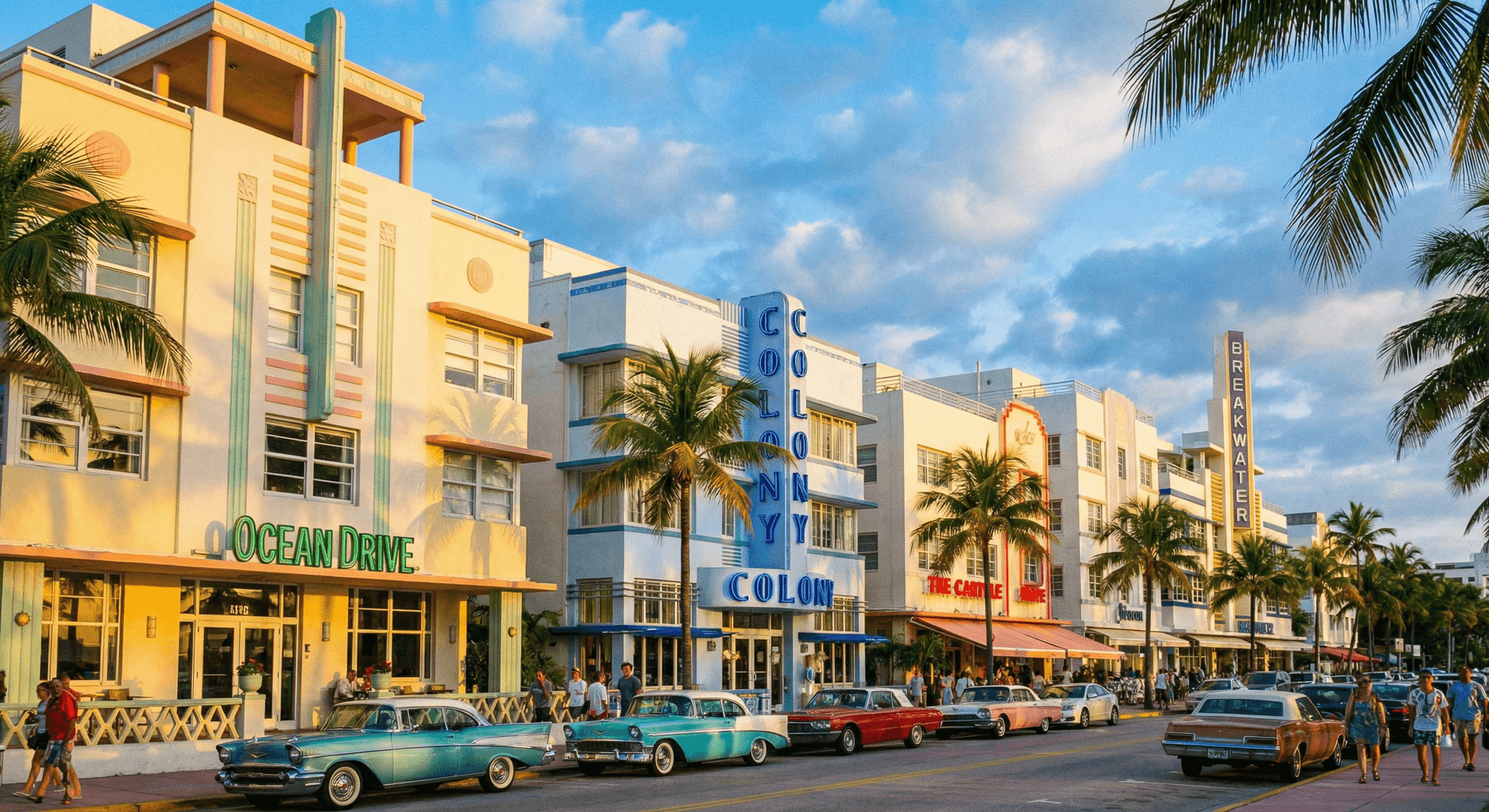
If you've seen photos of Miami and thought "what are those pastel-colored buildings with the curved edges and neon signs?" — welcome to the Art Deco Historic District. Located in South Beach, it's one of the most visually stunning urban neighborhoods in the entire United States, and for first-time visitors, it's absolutely unmissable.
This guide covers everything you need to explore the district on your own: the best streets to walk, the key buildings to spot, tour options, costs, and practical tips to make the most of your visit.
What Is the Art Deco Historic District?
The Miami Beach Architectural Historic District — commonly called the Art Deco Historic District — contains over 900 historic buildings constructed between 1923 and 1943, making it the largest concentration of Art Deco architecture in the world. The district stretches roughly from 5th Street to 23rd Street and spans three parallel avenues: Ocean Drive, Collins Avenue, and Washington Avenue.
The style was born out of a specific moment: Miami Beach was a booming resort destination in the 1930s, and developers wanted buildings that felt glamorous, modern, and tropical. Architects like Henry Hohauser, Albert Anis, and L. Murray Dixon responded with pastel facades, "eyebrow" ledges above windows to block the Florida sun, Streamline curves borrowed from cars and planes, and vertical towers that made even short buildings feel dramatic. Tropical motifs — flamingos, sunbursts, nautical details — appear in plaster and terrazzo throughout.
By the 1970s, the district had deteriorated significantly. The Miami Design Preservation League (MDPL), founded in 1976 by Barbara Baer Capitman, successfully lobbied for historic preservation — and the neighborhood was listed on the National Register of Historic Places in 1979. Today it's a global landmark and one of Miami's most visited attractions.
Before you head over, check the South Beach guide for a broader orientation to the area, including parking, beach access, and where the neighborhood boundaries sit.
The Three Streets You Need to Walk
Ocean Drive is the showstopper and your first stop. Lined on the west side by a continuous row of preserved Art Deco hotels — and on the east by Lummus Park and the Atlantic Ocean — this is the most photographed street in Miami. Start at the southern end, around 6th Street, and walk north.
Key buildings to look for:
- The Celino Hotel (630 Ocean Drive, 1937) — bold vertical bands and those signature "eyebrow" window shades. One of the most intact examples on the block.
- The Colony Hotel (736 Ocean Drive, 1935) — the neon sign is iconic and frequently used in Miami photography.
- The Carlyle (1250 Ocean Drive, 1941) — three vertical fins rising above the roofline give this one a dramatic silhouette.
- The Cardozo Hotel (1300 Ocean Drive, 1939) — a Streamline Moderne masterpiece with horizontal curves and a sweeping canopy.
For the best photos, cross to the east (beach) side of Ocean Drive. The wide sidewalk and lack of obstructions let you capture entire building facades — the perspective from the park is far better than standing directly in front.
Collins Avenue, one block west of Ocean Drive, has more buildings in active use as boutique hotels. The standout here is the Essex House Hotel (1001 Collins Ave, 1938), designed by Henry Hohauser with porthole windows and a smokestack tower that makes the whole building look like an ocean liner docked on land. It's a perfect example of "Nautical Deco," a Miami sub-style that referenced the cruise ships bringing tourists to town.
Washington Avenue is the most commercial of the three streets but has standout gems. The U.S. Post Office (1300 Washington Ave, 1937) is still operational and features a dramatic starburst ceiling mural — worth stepping inside. At 301 Washington Ave, the former Beth Jacob Synagogue (1936) now houses the Jewish Museum of Florida-FIU, one of the few district buildings with a publicly accessible interior.
Tour Options and Costs
| Option | Cost | Duration | Notes |
|---|---|---|---|
| Self-guided walk (free) | $0 | 1.5–2.5 hrs | Just show up and walk |
| MDPL Official Guided Tour | $35 adults / $30 students & seniors / Free under 12 | ~2 hrs | Departs 10:30am daily from 1001 Ocean Dr |
| Art Deco Museum admission | $7 (free for students, military, Miami-Dade residents) | 30–45 min | Included with MDPL tour ticket |
| MDPL Audio Tour (self-guided) | $5 via app | 1.5 hrs | Available in English, Spanish, German, French |
The MDPL Official Guided Walking Tour is worth it for first-timers. Your guide covers not just architecture but social history — the Jewish snowbirds who built these hotels, the Cuban exile community of the 1960s, the near-demolition in the 1970s, and the celebrity-driven revival. Tickets are at the Art Deco Welcome Center (1001 Ocean Drive) starting at 10am; book ahead at mdpl.org since weekend tours fill fast.
The Art Deco Museum (also 1001 Ocean Drive) is small but well-curated — original blueprints, archival photos, and a video narrated by Barbara Capitman. Spending 30 minutes here before walking the streets makes the buildings click into context immediately.
Prefer your own pace? The MDPL audio tour app ($5) covers the same route with commentary in English, Spanish, German, or French. Download it before you arrive so it works offline.
Practical Tips for First-Timers
Go in the morning. Beat the heat and the crowds — aim for 8–10am on weekdays. The guided tour departs at 10:30am, which hits the sweet spot before Ocean Drive gets busy. For how the neighborhood transforms after dark, the South Beach morning vs. night guide covers the full picture.
Wear comfortable shoes. Cobblestones, uneven terrazzo sidewalks, and 90°F heat don't mix well with sandals.
Look up. Most visitors walk with their eyes at street level and miss the rooflines, neon towers, and decorative friezes. Step back and look at the full facade of each building.
Don't eat on Ocean Drive. It's Miami's most overpriced restaurant corridor. Walk one block west to Collins or two blocks to Washington for better food at half the price. The tourist traps vs. local favorites guide has the full breakdown.
Getting there without a car. The Miami Beach SunTrolley's South Beach Local route runs along Washington Avenue and stops within easy walking distance of Ocean Drive. If you're coming from Downtown Miami, the South Beach Local connects with the Miami Beach Trolley network at Alton Road. Full transit routing options are covered in the getting around Miami without a car guide.
Safety. The Art Deco District around Ocean Drive and Lincoln Road is well-lit and heavily trafficked — it's one of Miami's safest tourist areas at all hours. The Miami safety guide for first-time visitors covers which nearby areas to be more cautious in after dark.
When to Visit
October through April is peak season for good reason: temperatures are mild (low 70s to low 80s°F), humidity is low, and the light is extraordinary. If you're planning a trip specifically around the architecture, November through March is the sweet spot.
The second or third week of January brings the Art Deco Weekend Festival (usually on the Ocean Drive strip), a free three-day event with live jazz, vintage cars, fashion shows, and tours. It's one of Miami's most beloved annual events and completely free to attend.
During summer (June–September), the district is hot and humid but far less crowded, and hotels slash their prices. Early-morning walks are still gorgeous — just be done before 11am.
Quick Facts
| Item | Detail | | -------------------- | ------------------------------------------------------------------------------------ | --------------- | -------------------- | | Location | Ocean Drive, Collins Ave & Washington Ave, South Beach, Miami Beach | | Best access | SunTrolley South Beach Local, Uber/Lyft, or bike (Citi Bike dock at 10th & Ocean Dr) | | Guided tour departs | 1001 Ocean Drive, daily at 10:30am | | Art Deco Museum | 1001 Ocean Drive | Mon–Sun 9am–5pm | $7 general admission | | District hours | Open air — free to walk 24/7 | | Best for photos | Golden hour (7–9am) | | Nearest beach access | Lummus Park, 5th–14th Street (free) |
The Art Deco Historic District is the kind of place that surprises people. Most visitors expect it to be a tourist cliché — and they come away thinking it's one of the coolest urban neighborhoods they've ever walked through. Come in the morning, take the tour, spend an hour in the museum, then reward yourself with a café cubano somewhere on Collins. That's a perfect South Beach morning.
For everything else to do in the area, the South Beach guide has you covered from beach to nightlife to where to stay.