Bill Baggs Cape Florida State Park: The Complete First-Timer's Guide
 AI-generated (Nano Banana Pro)
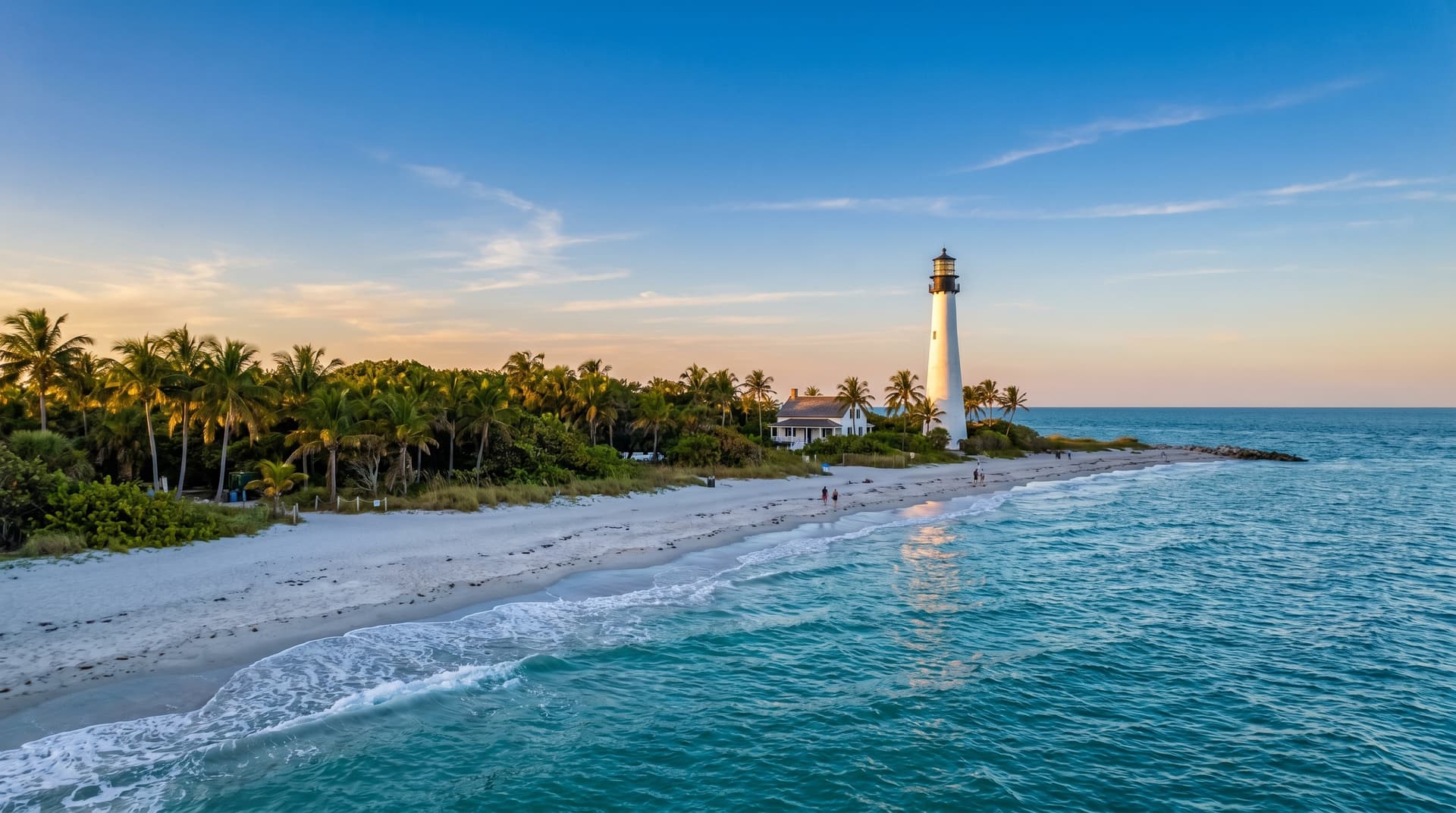
At the very southern tip of Key Biscayne, past the condos and the golf courses, the road dead-ends at Bill Baggs Cape Florida State Park — 400 acres of beach, mangroves, and coastal hammock that feel more like the Florida Keys than metro Miami. The park is home to the Cape Florida Lighthouse, the oldest standing structure in Miami-Dade County, and a beach that consistently ranks among the top ten in the United States.
Despite being just 15 minutes from downtown Miami, Bill Baggs has a quieter, more natural atmosphere than anything you'll find on South Beach. There are no high-rises on the horizon — just turquoise water, sea grapes, and the lighthouse standing watch over the Atlantic. If you only visit one outdoor attraction in Miami, this park makes a very strong case for itself.
Getting There and Parking
Bill Baggs is located at 1200 S. Crandon Blvd., Key Biscayne, FL 33149 — the very end of the road. From downtown Miami or Brickell, take the Rickenbacker Causeway south across the bay. The causeway toll is $2.25 each way and entirely cashless, so you'll need a SunPass transponder or the toll will be billed to your rental car automatically.
If you're getting around Miami without a car, the 102 bus runs from Brickell Station to Key Biscayne, but service can be limited on weekends and the bus stops before the park entrance — you'd still need to walk or bike the last stretch. Rideshare is the easiest car-free option, though getting a ride back can take a few minutes since drivers aren't always circling the area.
Parking inside the park is included in your admission fee, and there are several lots scattered across the grounds. On weekends and holidays the park fills to capacity early — often by 10 a.m. in peak season — and closes its gates until enough cars leave. Arriving before 9:30 a.m. on Saturdays is the safest bet. Weekday mornings are rarely crowded.
The Beach
Bill Baggs beach stretches for about 1.25 miles along the Atlantic side of the cape, and it's the main reason most people visit. The sand is soft and clean, the water is that transparent blue-green you normally associate with the Keys, and the vibe is relaxed in a way that South Beach hasn't been in decades.
The swimming conditions are excellent. A reef system about six miles offshore takes the punch out of incoming swells, so the water stays calm and shallow near the shore — great for families with young kids. There is no strong undertow, though you should still keep an eye on posted flag conditions.
Umbrella and beach chair rentals are available at the concession stand near the main beach area. Expect to pay around $15–$20 for a chair and umbrella combo for the day. The beach also has outdoor showers, restrooms, and several picnic pavilions with grills that you can reserve in advance through the Florida State Parks website.
Cape Florida Lighthouse
The Cape Florida Lighthouse is the undisputed centerpiece of the park. Built in 1825, it's the oldest standing structure in Miami-Dade County, and climbing its 109 spiral steps rewards you with a panoramic view of the Atlantic, Biscayne Bay, the floating houses of Stiltsville, and the Miami skyline in the distance.
Free guided tours run Thursday through Monday at 10 a.m. and 1 p.m. — no reservation needed, just show up at the base of the lighthouse a few minutes early. Children must be at least 42 inches tall and able to climb independently. The lighthouse grounds are open daily from 9 a.m. to 5 p.m. even when tours aren't running, and the keeper's cottage at the base houses a small exhibit on the lighthouse's turbulent history, including the 1836 Seminole attack.
The top of the lighthouse is one of Miami's best photography spots. Morning light is softer and less crowded; the 1 p.m. tour gives you harsher light but a clearer view of Stiltsville.
Biking, Kayaking, and Water Sports
Bill Baggs is one of the best places in Miami to explore on two wheels. A paved bike path runs the full length of the park, winding through coastal hammock and mangrove edges with water views on both sides. Single bikes rent for around $9 per hour or $15 for 90 minutes. Quad bikes that seat two adults and two small children in the front basket go for about $20 per hour — a fun option for families.
Kayak rentals are available near the concession area, and paddling through the mangrove-lined shoreline on the bay side is a highlight most visitors miss. The water is usually flat and protected, making it accessible even for beginners. You'll often spot manatees, stingrays, and wading birds in the shallows. Hydro bikes (pedal-powered pontoon bikes) are another option if you want to get on the water without getting wet.
Fishing is popular from the seawall and the jetty at the park's southern tip. Snook, mangrove snapper, and tarpon are the main catches. You'll need a valid Florida saltwater fishing license, which you can buy online through the FWC website. The jetty rocks are also a decent — if limited — spot for snorkeling, with small tropical fish darting around the structure.
Trails and Wildlife
The park's 1.5-mile Mangrove Wetlands Trail loops around No Name Harbor on the bay side. It's a flat, shaded walk through red and black mangroves that feels surprisingly wild given how close you are to the city. Bring bug spray, especially in summer — mosquitoes here mean business.
Birders will find Bill Baggs rewarding year-round. The park sits on the Atlantic Flyway migration route, and spring and fall bring waves of warblers, raptors, and shorebirds. Resident species include brown pelicans, ospreys, great blue herons, and roseate spoonbills. The area around the lighthouse and the native coastal hammock are the best spots for migratory species.
Gopher tortoises — a Florida threatened species — are commonly seen along the bike paths and near the picnic areas. They're protected, so keep your distance and never feed them.
Where to Eat
You have two solid options without leaving the park. The Lighthouse Café, near the lighthouse, serves sandwiches, burgers, fresh fish, and cold drinks in a casual open-air setting with views of the water. It's nothing fancy, but the fish tacos are better than they need to be for a state park concession.
Boater's Grill, on the No Name Harbor side, is the more popular choice and the better meal. It's a full sit-down restaurant right on the water with a menu focused on fresh seafood — grilled mahi, ceviche, conch fritters, and a well-regarded key lime pie. Prices are moderate for Miami (entrées $15–$25), and the waterfront setting is genuinely lovely. It's busiest at weekend lunch, so showing up at 11:30 a.m. or after 2 p.m. avoids the longest waits.
If you'd rather bring your own food, the park has multiple covered picnic pavilions with charcoal grills. Pavilions can be reserved in advance, but a few are first-come-first-served.
Practical Tips for First-Time Visitors
Arrive early on weekends. The park reaches vehicle capacity fast on Saturdays, Sundays, and holidays. Once full, the gate closes and doesn't reopen for at least two hours. Before 9:30 a.m. is your safest window.
Bring sunscreen and water. Shade on the beach is limited to what you rent or bring. The bike paths have more tree cover, but the lighthouse area and beach are fully exposed.
Budget about half a day. Most visitors spend three to five hours — enough time to hit the beach, climb the lighthouse, bike the trails, and grab lunch. You can absolutely fill a full day if you add kayaking or a longer trail walk.
Combine it with Crandon Park. Crandon Park Beach is a five-minute drive north and has its own set of activities — a nature center, amusement center, and an even larger beach. Doing both parks in one day is very doable, especially if you start at Bill Baggs early and shift to Crandon in the afternoon.
Check for sea conditions. While the beach is generally calm, strong east winds can kick up some chop. Posted flag conditions at the entrance tell you what to expect before you unpack your gear.
Bill Baggs Cape Florida State Park is one of those rare Miami spots that combines genuine natural beauty, a dose of history, and enough activities to keep everyone occupied — without the crowds, the cover charges, or the velvet ropes. It's the Miami most first-time visitors don't know about, and it's worth every penny of the $8 admission.