Little Haiti — Miami's Most Authentic Caribbean Neighborhood (First-Timer's Guide)
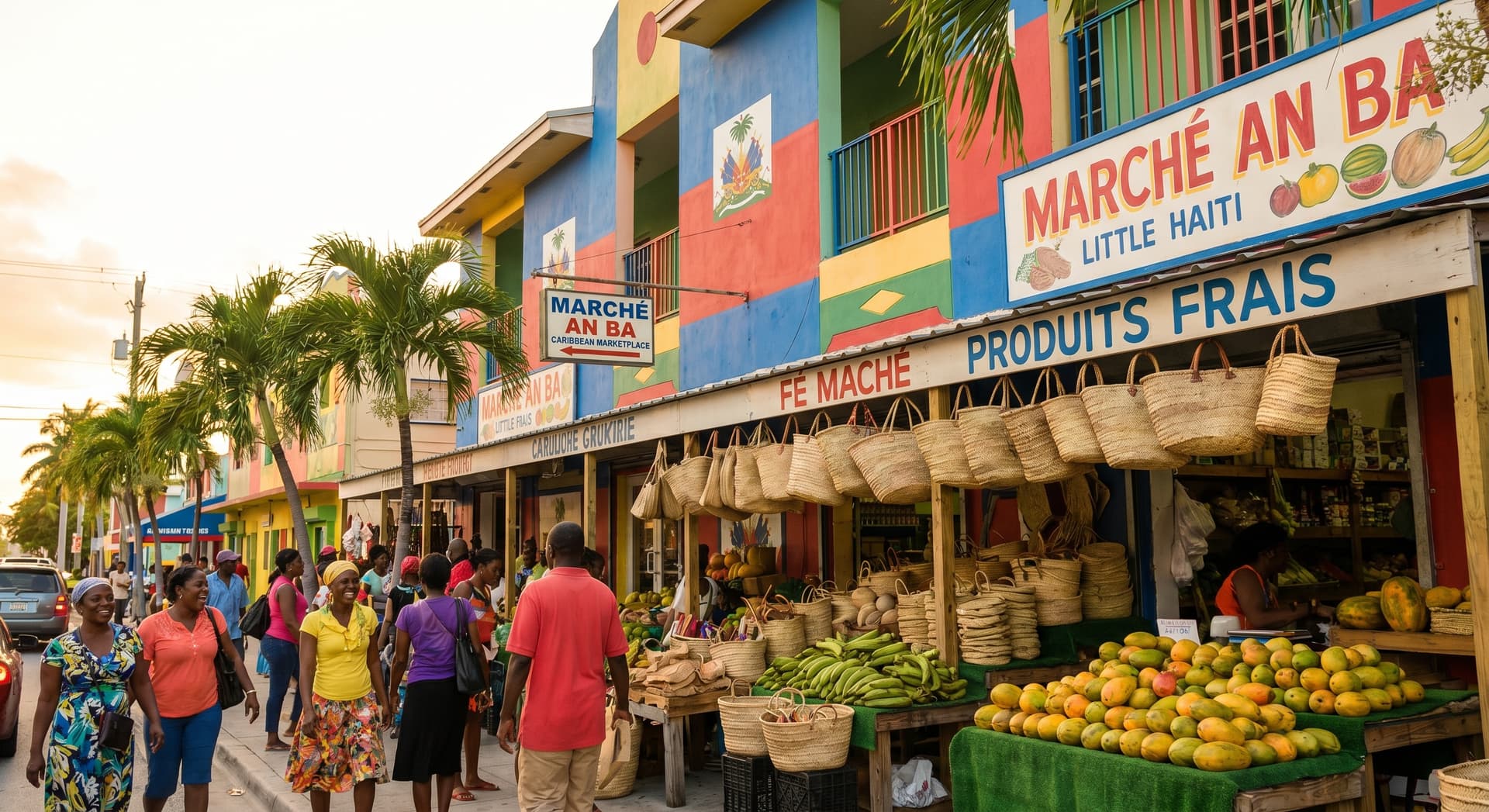 AI-generated (Nano Banana Pro)
Most first-time visitors to Miami hit South Beach, swing through Wynwood, maybe grab a cafecito in Little Havana, and call it a trip. That's a fine itinerary — but it skips one of the city's most rewarding neighborhoods entirely. Little Haiti, roughly bounded by I-95 to the west, Biscayne Boulevard to the east, and 54th to 85th Streets, is where Kreyòl echoes from bakery counters, pastel-painted storefronts sell handmade crafts, and a plate of griot with pikliz costs less than a cocktail on Ocean Drive.
If you want to see the Miami that locals actually live in — rather than the one printed on postcards — this guide will get you there.
What Makes Little Haiti Special
Little Haiti has been the heart of Miami's Haitian diaspora since the 1980s, when waves of immigrants settled here and built a community from scratch. Today the neighborhood is a living, breathing piece of Caribbean culture transplanted onto the Florida mainland. You'll hear French Creole on the sidewalks, smell slow-simmered legim drifting out of kitchens, and see murals honoring Haitian history on nearly every block.
Unlike more polished Miami neighborhoods, Little Haiti hasn't been scrubbed for tourists. That rawness is the appeal — and exactly why it rewards visitors who show up with curiosity and respect.
The Caribbean Marketplace and Cultural Complex
The anchor of the neighborhood is the Little Haiti Cultural Complex at 212–260 NE 59th Terrace. The crown jewel inside is the Caribbean Marketplace (Mache Ayisyen), a 9,000-square-foot open-air hall modeled after the famous Iron Market in Port-au-Prince. Vendors sell wood carvings, hand-painted art, woven baskets, herbal remedies, and fresh sugarcane juice.
The Cultural Complex also houses an art gallery, dance studios, a 300-seat theater, and a courtyard stage used for concerts and community events. It's open Monday–Friday 10 AM–9 PM and Saturday 10 AM–4 PM (closed Sunday). Special Caribbean Market Days happen on the 2nd and 4th Saturdays with extra vendors, live drumming, and prepared food. Admission is free.
If you only have an hour in Little Haiti, spend it here — it's the most concentrated dose of Haitian culture you'll find outside of Haiti itself.
Sounds of Little Haiti — The Free Block Party You Shouldn't Miss
Every third Friday of the month, the streets around the Cultural Complex transform into a full-blown outdoor festival called Sounds of Little Haiti. Live kompa and zouk bands play on a main stage, dance troupes perform, food vendors set up along the sidewalks, and the whole neighborhood comes out. It starts around 6 PM and runs until 10 PM. There's no cover charge and no ticket required — just show up.
This event alone is worth planning a Friday evening around. Combine it with dinner at one of the restaurants below and you've got one of the best free nights out in Miami. For more no-cost experiences, check out our guide to free things to do in Miami.
Where to Eat — The Essential Little Haiti Food Stops
Eating in Little Haiti is remarkably affordable. A full plate at most spots runs $10–$18, and portions are generous. Here are the standouts:
Chef Creole — The late Anthony Bourdain put this family-run spot on the map, and it's been operating since 1992. Order the conch stew or the griot (fried pork) with a side of diri djon djon (black mushroom rice). Entrées $12–$20.
Chez Le Bebe — Claims to serve "the best griot in town" and has a strong case after 34+ years. Plates come piled with rice, beans, salad, and a pork dipping sauce. Cash only.
Naomi's Garden — A lush courtyard restaurant that feels like eating on a Caribbean island. The jerk chicken and fried snapper are excellent. It's the most atmospheric dining spot in the neighborhood.
Clive's Café — When the craving is Jamaican rather than Haitian, Clive's delivers outstanding jerk chicken and curried goat in a no-frills setting.
Piman Bouk Bakery — Stop here for pen kreyòl (Creole bread) and flaky patties stuffed with salted cod or spiced beef. Perfect for a cheap breakfast or snack on the go.
For a broader look at Miami's food scene, see our food halls guide and our Little Havana food guide — the two neighborhoods pair perfectly for a DIY cultural food crawl.
Art Galleries and Street Art
Little Haiti's art scene operates on a different wavelength than Wynwood's Instagram-ready murals. Here the galleries tend to be smaller, more experimental, and deeply tied to the Caribbean diaspora. Notable stops include:
Nina Johnson Gallery — A respected contemporary gallery that shows both emerging and established artists in a beautifully converted warehouse space.
Emerson Dorsch — One of Miami's longest-running galleries, known for pushing boundaries with installation and multimedia work.
Laundromat Art Space — Exactly what it sounds like: a former laundromat turned studio and exhibition space. It captures the DIY spirit of the neighborhood perfectly.
Libreri Mapou — Part bookstore, part cultural center. It carries works by Haitian authors in Kreyòl, French, and English, plus Haitian art, music, and handcrafted gifts. A wonderful place to browse and learn.
Street art is everywhere, too — walk along NE 2nd Avenue between 54th and 62nd Streets and you'll pass murals depicting Haitian revolutionary heroes, Caribbean landscapes, and community pride.
How to Get There
Little Haiti sits just north of the Design District and west of the Upper East Side, about 15 minutes by car from Downtown Miami.
By rideshare: An Uber or Lyft from South Beach runs $12–$18; from Downtown or Brickell, $8–$14.
By trolley: Miami's free Little Haiti Trolley connects the neighborhood to the Design District, Midtown, and the MiMo District along Biscayne Boulevard. For more on Miami's free trolley system, see our trolley guide.
By bus: Metrobus routes 2, 9, 54, and 62 serve the area. The closest stops are NE 2nd Ave & NE 57th St and NW 2nd Ave & NW 58th St.
Parking: Street parking is available and usually free, though it fills up fast during Sounds of Little Haiti. Arrive early on event nights or take a rideshare.
Safety Tips
Little Haiti is a working neighborhood, not a tourist zone, and that's part of its charm. During the day you'll feel perfectly comfortable exploring the main corridors. A few practical notes:
Stick to NE 2nd Avenue and the blocks around the Cultural Complex, where foot traffic is heaviest. Keep valuables out of sight and phones in your pocket when walking. For evening visits — especially Sounds of Little Haiti — travel in a group and rideshare home rather than walking to a distant parking spot after dark. These are the same precautions you'd take in any urban neighborhood; for broader context read our Miami safety guide for first-time visitors.
Plan Your Visit
Little Haiti pairs naturally with the Design District (a 5-minute drive or short trolley ride south) and Wynwood just beyond that. A solid half-day route: breakfast pastries at Piman Bouk, gallery-hop through Little Haiti, trolley down to the Design District for lunch, then continue into Wynwood for afternoon street art. If you're building a full trip, our 3-day Miami itinerary makes a good starting framework — just swap in Little Haiti for one of the flex slots.
Little Haiti won't wow you with bottle-service clubs or designer storefronts. It will, however, give you something rarer: a genuine sense of place, incredible food at honest prices, and a window into one of Miami's most resilient communities. That's worth the detour.