Everglades Day Trip from Miami: The Complete First-Timer's Guide
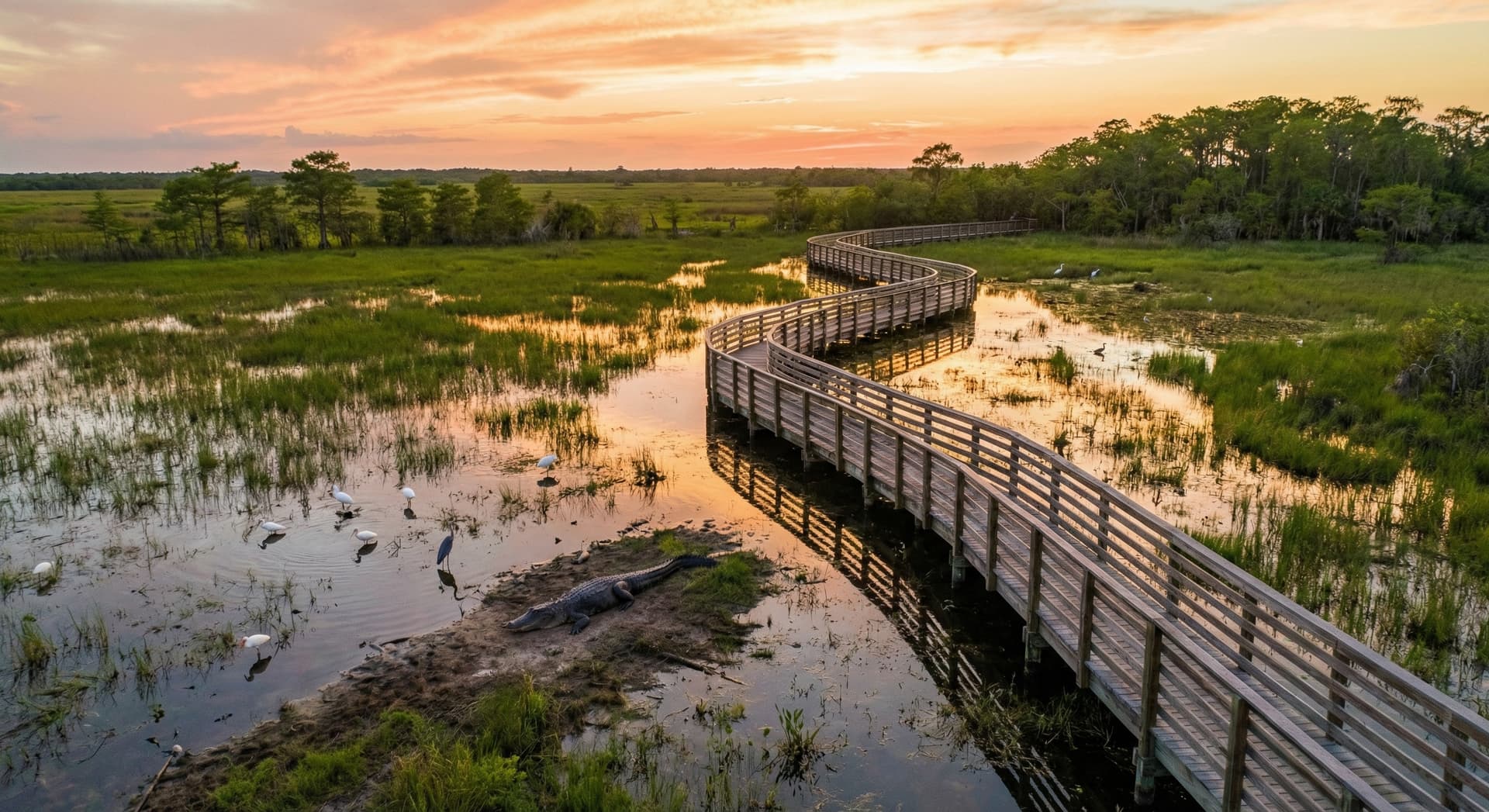 AI-generated (Nano Banana Pro)
Miami is skyscrapers and sand, but 45 minutes west the city dissolves into one of the wildest landscapes in North America. The Everglades — a slow-moving river of sawgrass, cypress domes, and mangrove islands — stretches across 1.5 million acres of southern Florida. It's the only place on Earth where alligators and crocodiles coexist in the wild, and it's close enough to visit between breakfast and dinner.
If you're debating whether to squeeze the Everglades into your Miami itinerary, the short answer is yes. Here's everything you need to make it happen without wasting time or money.
Three Ways to Experience the Everglades in a Day
Not all Everglades experiences are the same. The park has three main entry points, and each one offers a different slice of the ecosystem.
Shark Valley (closest to Miami) — Just 45 minutes from Downtown via the Tamiami Trail (US-41). This is the most popular entry for day-trippers. A 15-mile paved loop road cuts through open sawgrass prairie where alligators sun themselves right on the path. You can bike it, walk a portion, or take the guided tram tour that stops at a 45-foot observation tower with panoramic views. If you only have a few hours, start here.
Homestead Entrance (Ernest Coe Visitor Center) — About an hour south of Miami via the Florida Turnpike. This is the park's main entrance and gives you access to the most trails: the famous Anhinga Trail (short, flat, packed with wildlife), Gumbo Limbo Trail, Pa-hay-okee Overlook, and the road all the way down to Flamingo on Florida Bay. Best if you have a full day and your own car.
Gulf Coast (Everglades City) — About 1 hour 45 minutes west. This entrance opens into the Ten Thousand Islands mangrove maze — stunning for kayaking and boat tours but too far for a comfortable day trip from Miami unless you leave very early. Skip it unless you're spending a night out west.
For most first-timers based in Miami, Shark Valley or the Homestead entrance is the right call. You can realistically combine Shark Valley in the morning with the Anhinga Trail in the afternoon if you start early — they're about 70 minutes apart by car.
What It Costs
The Everglades is a U.S. National Park, and entrance fees apply at all gates.
| Item | Cost |
|---|---|
| Vehicle entrance (7-day pass) | $35 |
| Motorcycle entrance | $30 |
| Per-person entry (walk/bike/bus) | $20 |
| Children 15 and under | Free |
| America the Beautiful annual pass | $80 (covers all national parks) |
| Shark Valley tram tour — adult | $31 |
| Shark Valley tram tour — child (3-12) | $16 |
| Guided airboat tour (from Miami, with transport) | $29–55 |
| Bike rental at Shark Valley | ~$10/hour |
Tip: If you book a guided tour with transportation from Miami, confirm whether park entrance fees are included — most packages bundle them in, but not all.
The Airboat Question
Airboat rides are the most iconic Everglades experience, and three authorized operators run tours inside the national park along the Tamiami Trail: Coopertown Airboat Tours, Gator Park, and Everglades Safari Park. Rides last 30–40 minutes and cost $28–35 per adult, plus park entrance if you're driving yourself.
For visitors without a car, package tours from Miami start around $29 and typically include hotel pickup, the airboat ride, a wildlife show, and return transport — the entire outing takes about 4–5 hours. It's genuinely good value and the easiest way to check the Everglades off your list.
A few things to know before you board: airboats are loud (bring earplugs or accept it), you will get splashed at speed, and the ride covers shallow sawgrass marshes where you'll see alligators, turtles, wading birds, and — if you're lucky — a Florida softshell turtle the size of a dinner plate. Guides know exactly where the wildlife hangs out.
If you've already read our guide on where to see alligators in Miami, an airboat tour is the single best way to see them in a wild, natural setting rather than a zoo enclosure.
When to Go (and When to Skip It)
The Everglades has two seasons that matter:
Dry season (November–April) is prime time. Water levels drop, animals concentrate around remaining pools, and you'll see more wildlife per hour than almost anywhere in the U.S. Mosquitoes are manageable. Temperatures hover in the mid-70s to low 80s °F. This is also peak tourist season, so book Shark Valley tram tours in advance — they sell out.
Wet season (May–October) brings daily afternoon thunderstorms, oppressive humidity, and mosquito swarms that can be genuinely miserable. Water spreads across the landscape and animals disperse, making sightings harder. It's not impossible to visit, but the experience is significantly worse. If your trip falls in summer, go as early in the morning as possible and drench yourself in DEET.
The sweet spot is December through March — dry, mild, and teeming with wildlife.
What to Bring
The Everglades is not a manicured theme park. Pack accordingly:
Sunscreen and a hat are non-negotiable — there is virtually no shade on the Shark Valley loop or the Anhinga Trail. Bug spray with DEET is essential even in dry season; in wet season, consider a head net. Bring at least a liter of water per person — there are very few places to buy drinks inside the park. Wear closed-toe shoes (trails can be muddy and uneven), and throw a light rain layer in your bag even if the forecast looks clear. Florida weather changes fast.
Binoculars make a huge difference for birding. The Everglades is home to roseate spoonbills, great blue herons, anhingas, wood storks, and dozens more species. If you're visiting during the best time to visit Miami — roughly November through April — you'll also catch migratory birds wintering in the park.
Getting There Without a Car
No rental car? No problem. The easiest option is a guided tour with pickup from Miami Beach or Downtown — companies like Miami Sightseeing Tours and Everglades Safari Park run daily departures starting around $29 per person.
If you prefer to go independently, the Shark Valley entrance is reachable via rideshare (about $35–45 one-way from Miami Beach), though getting a return ride can be tricky since cell service is spotty inside the park. Some visitors take a rideshare out and arrange a tour operator's shuttle back.
There is no public transit to any Everglades entrance. For more on navigating Miami's transport options, see our guide to getting around Miami without a car.
A Suggested Day Trip Itinerary
For first-timers with a car who want the highlights:
7:30 AM — Leave Miami. Head west on US-41 (Tamiami Trail) toward Shark Valley. The drive is about 45 minutes and the road itself cuts through the Everglades, so start watching for birds and gators along the canal shoulders.
8:30 AM — Arrive at Shark Valley. Catch the first tram tour of the day (check current schedule at sharkvalleytramtours.com). The two-hour narrated ride loops through open prairie and stops at the observation tower. Alligators are everywhere in dry season — often lying right on the path.
11:00 AM — Drive south to the Homestead entrance (about 70 minutes). Grab lunch at Robert Is Here, a legendary fruit stand and smoothie shop on the way — it's a Miami institution and worth the stop.
12:30 PM — Walk the Anhinga Trail (0.8 miles, flat boardwalk). This short trail is one of the best wildlife-viewing spots in all of Florida. Alligators, anhingas drying their wings, herons hunting fish — all within arm's reach of the boardwalk.
1:30 PM — Drive the park road toward Pa-hay-okee Overlook for sweeping views of the sawgrass river, then loop back.
3:00 PM — Head back to Miami. You'll be back in South Beach or Downtown by 4:30 PM, sunburned and full of smoothie, with a memory card full of alligator photos.
This pairs well with a mellow evening in one of Miami's best day trip destinations — or just collapse at your hotel. The Everglades earns its reputation as one of the most unique natural areas on the planet, and the fact that it's less than an hour from Ocean Drive is one of Miami's best-kept secrets.